


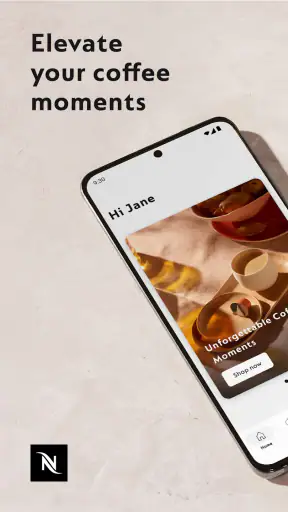

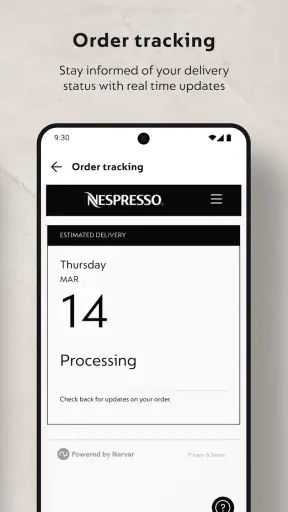
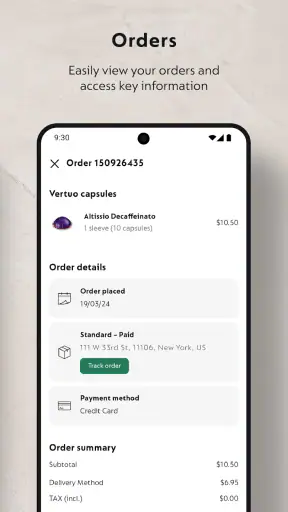
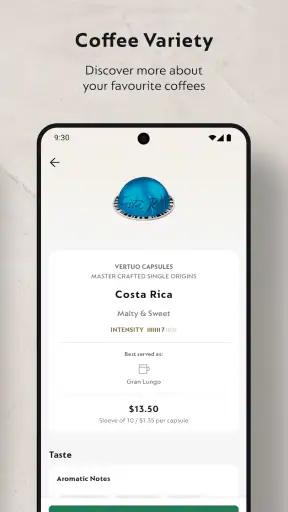
I found Nespresso Store most useful when I treated it as a focused shopping companion rather than a general coffee guide. It is built by Nespresso for people who already use, or are considering, the company’s coffee system and want to browse capsules, machines, and related items from a phone. The app is free and aimed at Everyone, which makes it easy to try without turning the decision into another purchase.
My main interest while using it was not simply whether I could place an order. I wanted to see how comfortably different people could read the information, move through the shopping flow, and make a choice when they were tired, distracted, using one hand, or relying on a small screen. That perspective matters because a coffee order can be a quick routine for one person and a surprisingly demanding sequence of product comparisons, selections, and checkout steps for another.
How the shopping experience works for different users
Readability and navigation
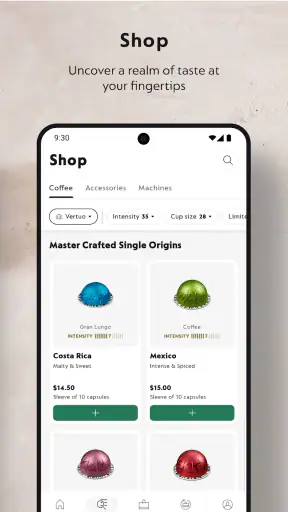
The strongest part of the app is its narrow purpose. Instead of mixing coffee shopping with a broad marketplace, it keeps the experience centered on Nespresso products. That focus can reduce mental effort for an existing customer: I can open it with a clear idea of what I need, browse the relevant range, and move toward a purchase without sorting through unrelated brands.
That simplicity is especially helpful when I am replacing a familiar capsule sleeve or checking a machine option from the sofa. A dedicated store also makes more sense than searching the web when I want the manufacturer’s own presentation of its products. The developer is clearly identified as Nespresso, and the app’s store summary presents the idea of bringing the coffee shop experience home without requiring me to interpret a crowded retail catalog.
On a phone, readability depends heavily on the way product cards, names, descriptions, and controls are arranged. I found that focused browsing is easier than comparing many alternatives at once. Coffee products often differ by intensity, flavor profile, format, and machine compatibility, so a user who reads slowly may benefit from opening one item at a time rather than trying to scan a long list.
My practical advice is to decide what kind of task you are doing before opening the app. If you already know the capsule family or machine you want, the focused store format is convenient. If you are completely new to Nespresso, slow down and read each product description instead of choosing from pictures alone. The visual presentation can make products feel easy to distinguish, while the details that actually determine whether an item suits your machine deserve more attention.
The app has attracted a strong audience, with a 4.8 average from around 88 thousand ratings and more than a million installs. Those figures suggest that the core shopping flow works well for many people, although popularity should not be confused with universal ease. A highly visual retail app can still create friction for someone who needs larger text, more time to compare items, or a very predictable route through checkout.
Motor and sensory considerations
Shopping from a phone can be more comfortable than visiting a store for users who find travel, queues, or busy retail spaces tiring. I can browse at my own pace, pause halfway through an order, and return when I have enough concentration to finish. That is a meaningful strength for people managing fatigue, chronic pain, anxiety, or a crowded daily schedule.
There is also a useful one-handed scenario. If I am holding a mug, standing in the kitchen, or helping someone at home, a short capsule reorder is easier when the product is already familiar. The app’s focused purpose means I do not need to navigate a general shopping service before reaching the coffee section. For a repeat purchase, that can turn an otherwise awkward task into a manageable one.
The trade-off is that product shopping still requires precise interaction. Selecting a particular item, adjusting a quantity, reviewing the basket, and completing payment all involve taps that may be difficult for users with tremors, limited reach, reduced dexterity, or an older phone. I would not assume that a clean-looking screen automatically solves those problems. The real test is whether buttons are comfortably separated, whether accidental taps are easy to correct, and whether the user can review each stage without rushing.
Sensory comfort is another mixed area. Coffee retail naturally relies on product photography and visual distinctions, which can be appealing but may not be enough for someone who cannot easily interpret color, small labels, or dense product text. I would approach the app with the phone’s own display and text settings adjusted to the user’s preference, then verify that important descriptions remain understandable rather than relying only on packaging images.
For users with hearing differences, a shopping flow that is primarily visual may be more convenient than a service that depends on spoken prompts or phone calls. For users with visual impairments, however, the experience will depend greatly on how well the operating system’s screen reader and magnification tools interact with the app’s labels and controls. I can recommend testing a small order first rather than assuming every element will be equally clear.
Situational access in everyday life
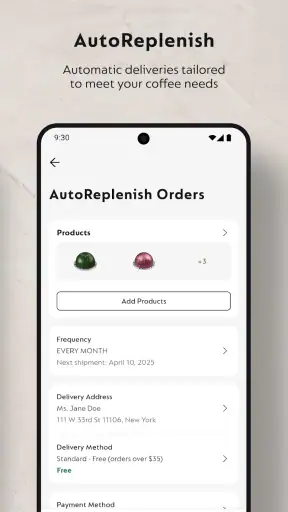
The most realistic use case for me is a rushed weekday morning. I notice that I am nearly out of capsules, but I do not want to search a supermarket shelf after work. I open the app during a quiet moment, identify the familiar product, check the basket, and finish the purchase from home. That is not a dramatic feature, but it is exactly the kind of routine where a dedicated store earns its place.
Another situation is shared household shopping. One person may know the machine while another handles ordering. In that case, the app can provide a common product screen to inspect together, but I would still confirm the exact format before paying. A household that uses more than one Nespresso system has a greater need for careful checking, because a visually similar capsule is not automatically the right choice for every machine.
The app can also help someone who prefers private, low-pressure browsing. A physical shop may involve asking staff to repeat information, navigating bright surroundings, or making a decision while other customers wait. At home, I can compare items gradually and stop when concentration drops. That is a genuine inclusion benefit, even though it comes from the shopping context rather than from a special accessibility mode.
Travel and temporary living arrangements introduce a different question. If I am away from home, the app may be useful for researching products, but the practical value of ordering depends on the delivery destination and the account or payment steps available in the relevant market. I would not begin an urgent purchase at the last minute. For a time-sensitive need, a nearby retailer or an already established ordering routine may be less stressful.
Users with limited data, an unreliable connection, or an older device should also choose their moment carefully. A mobile store is convenient when the phone behaves normally, but it is not a replacement for every offline option. If the app becomes slow while someone is trying to complete payment, the sensible response is to pause and verify the order rather than repeatedly tapping the same control.
Where the experience still creates barriers
The biggest limitation is that a focused catalog can still be complicated for newcomers. Nespresso products are not interchangeable simply because they share the same brand. Someone unfamiliar with the system may need to understand machine compatibility, capsule type, flavor preferences, and quantity choices before feeling confident. The app can support the purchase, but it does not remove the need for careful reading.
That distinction affects users with cognitive disabilities or anyone shopping while fatigued. A long set of similar product names can make decision-making harder, particularly when the user is trying to remember which machine is at home. I recommend keeping a photo or note of the machine model nearby and ordering a known product first. That small preparation reduces memory demands and makes the app less dependent on guesswork.
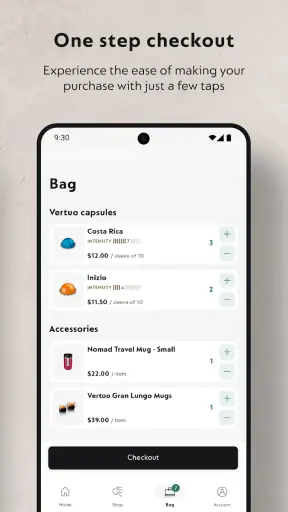
Checkout is another point where inclusive design matters. A user may be perfectly comfortable browsing but need assistance with address details, payment authentication, or correcting an accidental quantity change. I prefer to treat the final review as a separate step: check the product, quantity, delivery information, and total before submitting. This is useful for everyone, but especially for people who need more time or who find rapid confirmation screens difficult to follow.
There is also a social barrier that an app cannot solve by itself. A person who cannot comfortably use a touchscreen may still need help from a family member or support worker. That can be acceptable when the helper is trusted, but it reduces independence. I would like any shopping app to make review and correction especially transparent, because shared ordering works best when the customer can clearly see what is about to happen.
People who want broad price comparison may also prefer a general retailer. Nespresso Store is naturally centered on Nespresso’s own range, while a marketplace can place competing machines, compatible alternatives, and different sellers side by side. That broader view may be better for a first-time buyer who is still deciding whether to join the system. The dedicated app is more convincing for an existing customer who values a direct, brand-specific route.
Version, trust, and practical expectations
The app is currently listed as version 2.6.5 and supports Android 8.0 or later. That minimum requirement covers many older Android devices, which is helpful for users who cannot or do not want to replace a phone just to shop. Still, support for an older operating system does not guarantee an identical experience on every screen size, performance level, or manufacturer interface.
I would install it on the device I actually plan to use for ordering, not only on a newer family member’s phone. This matters for accessibility because text scaling, touch response, contrast, and screen-reader behavior can vary from one device to another. A quick test—opening a product, changing a quantity, reviewing the basket, and stopping before payment—can reveal whether the basic controls feel manageable.
The Everyone content rating is reassuring for households where several people may use the same device, but it should not be read as a promise that every interaction will suit every ability. It describes the intended age audience, not the comfort of the checkout process for someone with low vision, limited dexterity, or cognitive fatigue.
I also appreciate that the app is free to install. That lowers the risk of trying it, especially for someone deciding whether a dedicated store is easier than a browser. The real cost consideration is not the download; it is whether the app helps the user make a confident product choice and complete the order without needing repeated assistance.
Who should use it, and who may prefer another route
I would recommend Nespresso Store to an existing Nespresso owner who regularly reorders the same capsules or wants a convenient way to browse the brand’s machines and coffee products. It is also a good fit for someone who prefers shopping privately at home, needs to avoid busy stores, or wants to complete a purchase in short sessions.
It is less suitable for a shopper who wants to compare several coffee systems, find the lowest price across different sellers, or understand the wider market before buying a machine. A general shopping app or an in-person retailer may offer better side-by-side comparison in that situation. The dedicated store’s strength is focus, and focus becomes a limitation when the decision itself is still wide open.
I would also hesitate to recommend it as the only option for someone who cannot reliably operate touch controls or who depends on highly customized assistive technology. The right choice there is to test the app with the person’s usual settings and, if necessary, use a trusted helper or another purchasing channel. Convenience should not come at the cost of independence or confidence.
My inclusive verdict
After using it as a shopping tool, I see Nespresso Store as a practical, brand-specific option with meaningful situational advantages. It can remove the pressure of a physical shop, support repeat purchases from home, and keep the selection narrower than a general marketplace. Those qualities make it easier for many users to manage coffee shopping around fatigue, mobility limits, sensory preferences, or a busy routine.
Its accessibility story is more nuanced. The app’s focused structure helps, but users still need to read compatibility details, handle precise controls, and review checkout carefully. It is not the right choice for every first-time buyer, every device, or every motor and sensory need. My best advice is to use it for a small, familiar task first, adjust the phone’s accessibility settings, and confirm that the product information and checkout steps are comfortable before relying on it for larger orders.
With a 4.8 average and a large installed audience, it is clearly a well-established shopping app rather than an experimental download. I would install it when I want a direct route to Nespresso products and already understand the system I use. If I were comparing brands or needed a more flexible marketplace, I would choose another option. For the right customer, though, this free app makes a routine purchase calmer, more private, and easier to fit into real life.


